
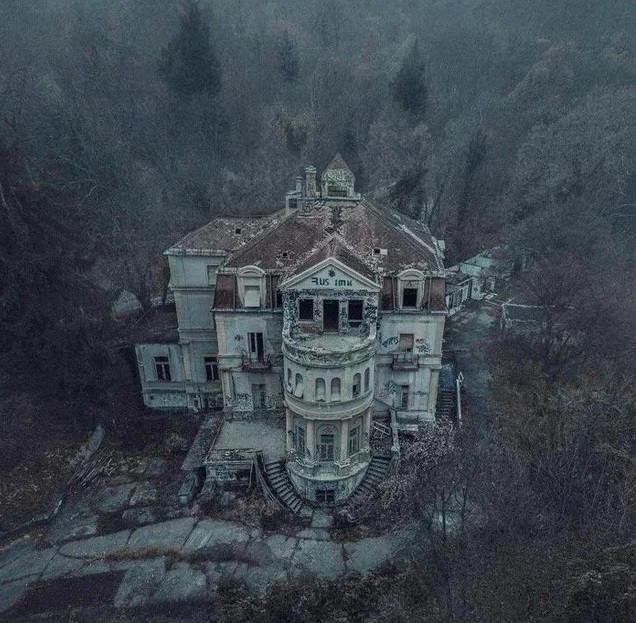
In Budapest, on one of the sparsely populated streets of the Zugliget, stands the former Preisich Sanitorium, which was built at the turn of the 20th century on the side of the Fairy Hill. The lovely villa has been abandoned since 2009.
Kornél Preisich’s career flourished from 1904 he became the chief physician of Szent László Hospital, and two years later he was appointed as a private lecturer at the university. In the meantime, his practice grew, he worked with many young doctors, including Pál Heim.
During the Council Republic, he became the director of Szent László Hospital, which led to a disciplinary investigation being launched against him in 1920. He was expelled from medical circles, suspended from his position as chief medical officer, but despite this, his practice did not lose its value, he also supervised the children of Weiss Manfred.
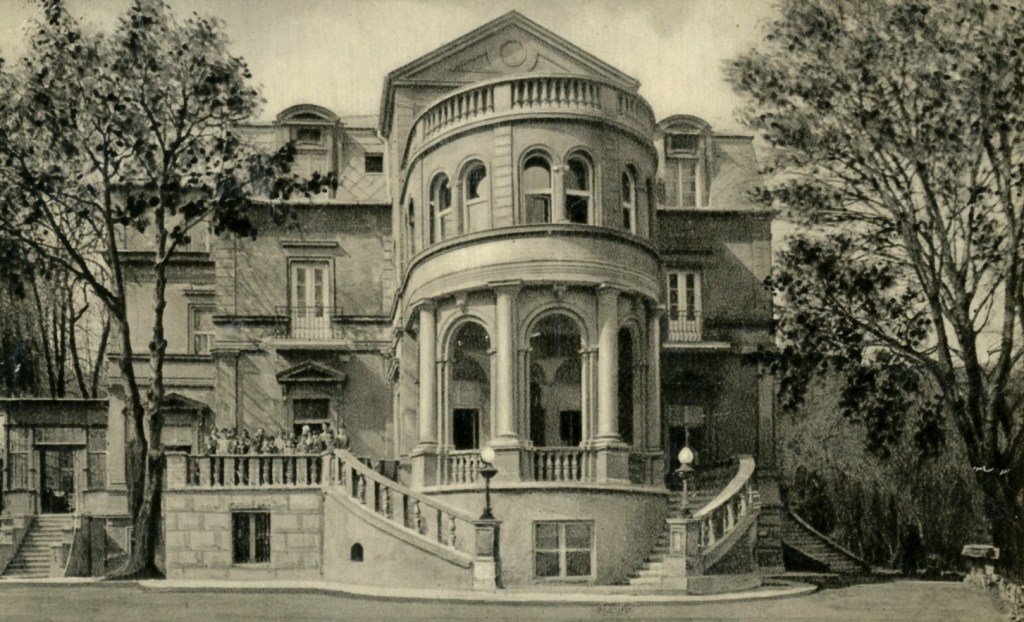
In the early ’20s, Kornél Preisich bought a villa built between 1906 and 1908 in the Zugliget, on the side of the Fairy Hill, so that he could start his work in his own medical institution within these walls. The operation of the sanatorium, for technical reasons, began only in 1929, which he himself led until the Second World War, where mostly children with lung diseases were treated.
It can be seen that the building has been rebuilt several times over the years. The columnar railings have disappeared from the upper balcony, and the terrace has also been installed at the bottom.
The Sanitorium Today
However, the Second World War came. Jewish law also applied to Cornelius Preisich, even though he was baptized at the beginning of the century and became a Calvinist, he had to wear the yellow star with his family. During the World War, they managed to hide; It was only thanks to luck that they escaped deportation.
After the war, the villa was nationalized by the ÁVH, which operated in the building until 1958, after which the property again received a health function: TB and mentally ill people were treated here.
Kornél Preisich was rehabilitated after the war, then honored, and even received the title of Doctor of Medical Sciences in 1952, but his sanitorium was never returned. He passed away in 1955, at the age of 85.
In 1978, the sanatorium was closed, and reopened a year later under the name “Tündérhegy Psychotherapy and Psychosomatic-Rehabilitation Department” with an outpatient clinic, after which the building was renovated and turned into an inpatient department shaped.
In the 1970s, a light-structured day hospital was built to the north of the courtyard, and a similar one was established between the main building and the porta. All of them are in an inexcusable state today, the building of the day hospital is almost completely burned out. On the wall next to the building, children’s drawings can still be seen to this day, as they have been preserved in several rooms.
In one of the rooms there are a large number of contemporary documents scattered with data from former patients.
Since 1994, the National Institute of Psychiatry and Neurology (O.P.N.I.) department, where they treated depressed people, panic patients, people with anxiety disorders, as well as those with phobias. The recollections of a former patient also reveal that in 2004 András Veér, chief psychologist, also visited Tündérhegy. His name may be familiar, since in 2000 he brought home the last Hungarian prisoner of war, András Toma, who was imprisoned in Russia for 53 years.
After the dissolution of O.P.N.I. in 2007, it functioned as an outsourced department of Szent István Hospital until 2009, since then the building has stood empty.
Over time, the building on the side of Fairy Hill began to sink, causing its walls to crack in several places. At the time, it was suggested that the MNV would move the then President of the Republic, László Sólyom, here. Hawk eventually turned it down along with the other offers because he thought it would have cost too much to renovate it. The Hungarian state did nothing with the villa building for 7 years before it announced it for sale in 2017, which was bought by a policy-related entrepreneur for HUF 509 million. According to some sources, the property is rumored to be for sale again.

 Favourite Haunts
Leave a comment