
In 1881, four prospectors were leaving Grapevine Station or present-day Barstow, California for a mountain peak to the northeast. They described the peak as “calico colored.” The prospectors discovered silver in the mountain, opening the Silver King Mine, which was California’s largest silver producer in the mid-1880s.
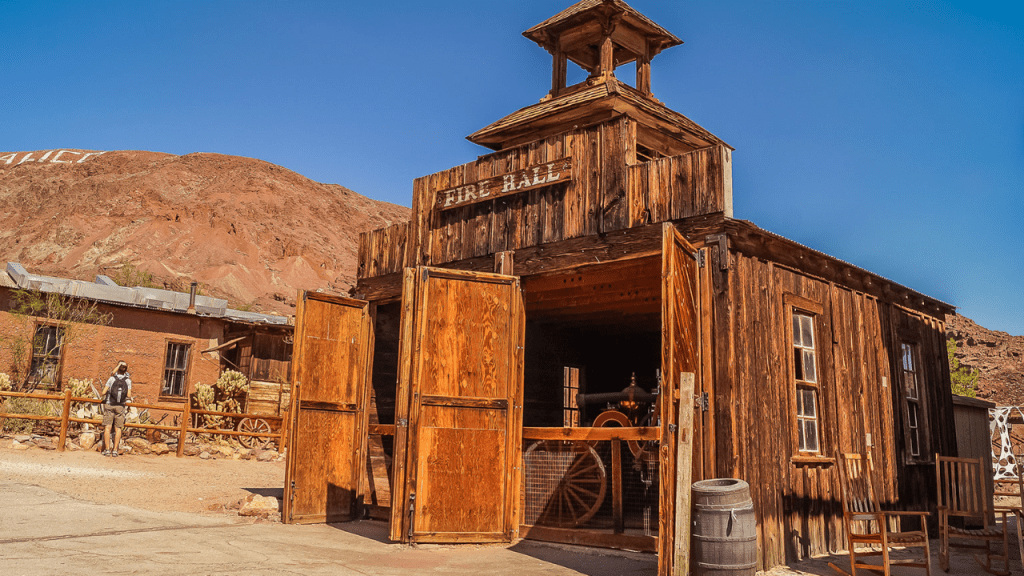
Scattered around the American west, and long forgotten lies the ghost town. Calico is an old West silver mining town that has been around since 1881 and was abandoned after silver became scarce. On April 6, 1881, several claims were located that formed the silver, largest mine in the district. Profitable mining of silver in the area ceased in 1896. The town that once gave miners prosperity became a “ghost town,” after the silver mine was depleted but because of colemanite mining lasted until 1929 after which it truly became a ghost town.
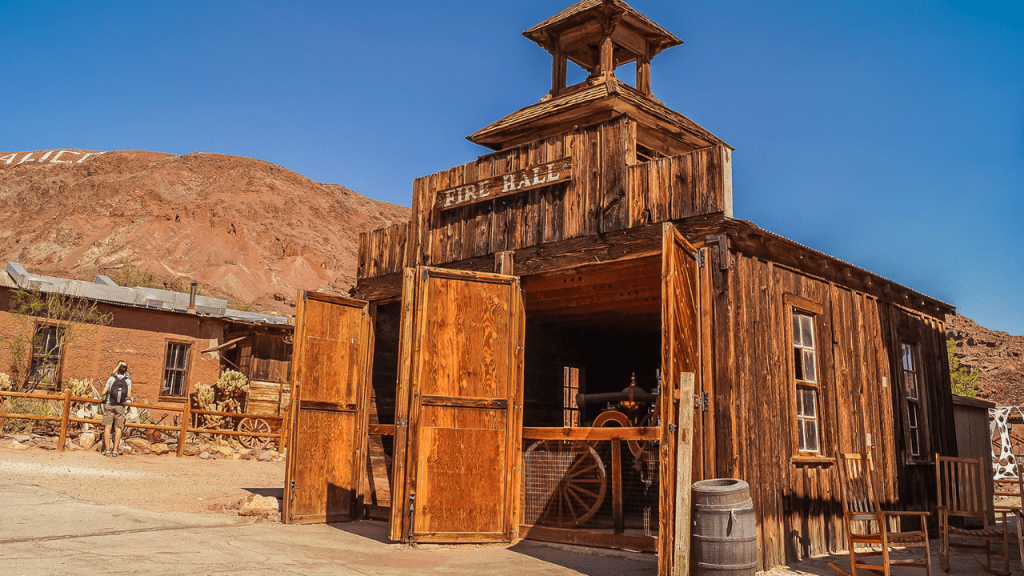
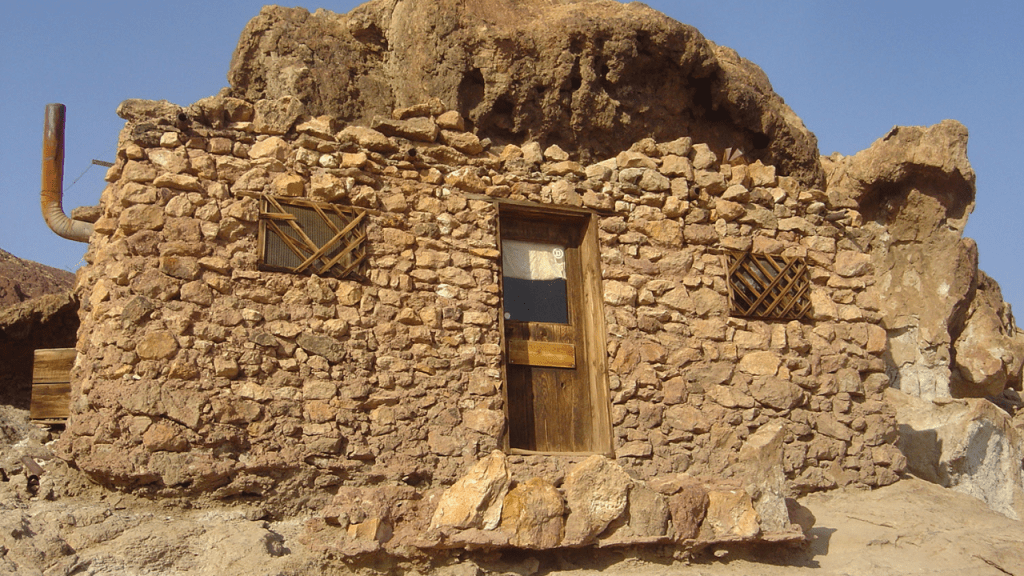
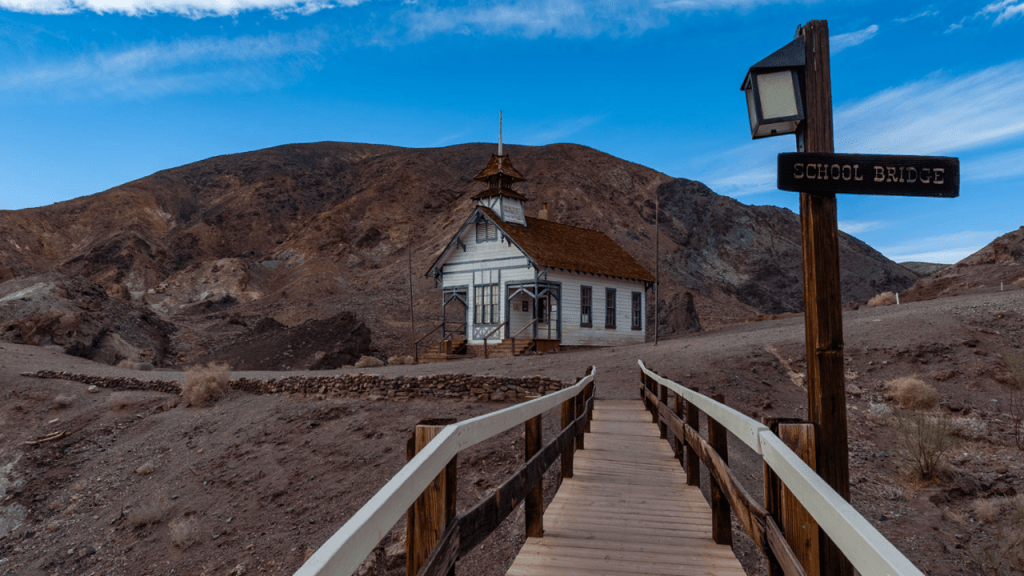
Walter Knott who had worked at the mines in 1910 is responsible for the town we see today. The original buildings, as in many of the early mining camps, were constructed from adobe brick for the lack of lumber. Cement has been used during the restoration but made to look as authentic as possible. Knott purchased Calico in the 1950’s restoring all but the five original buildings to look as they did before. Calico ghost town received State Historical Landmark status on November 20, 1962.
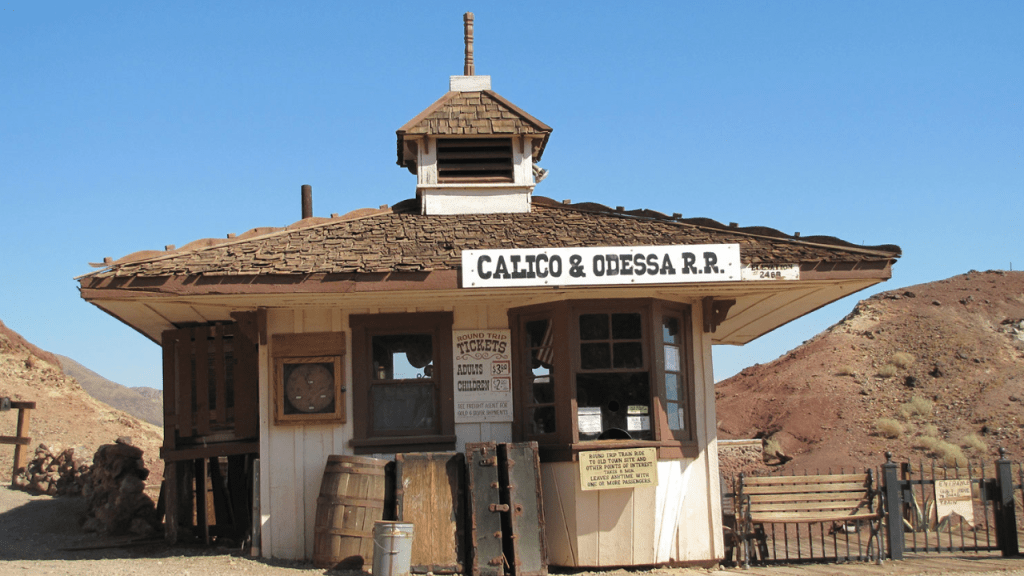
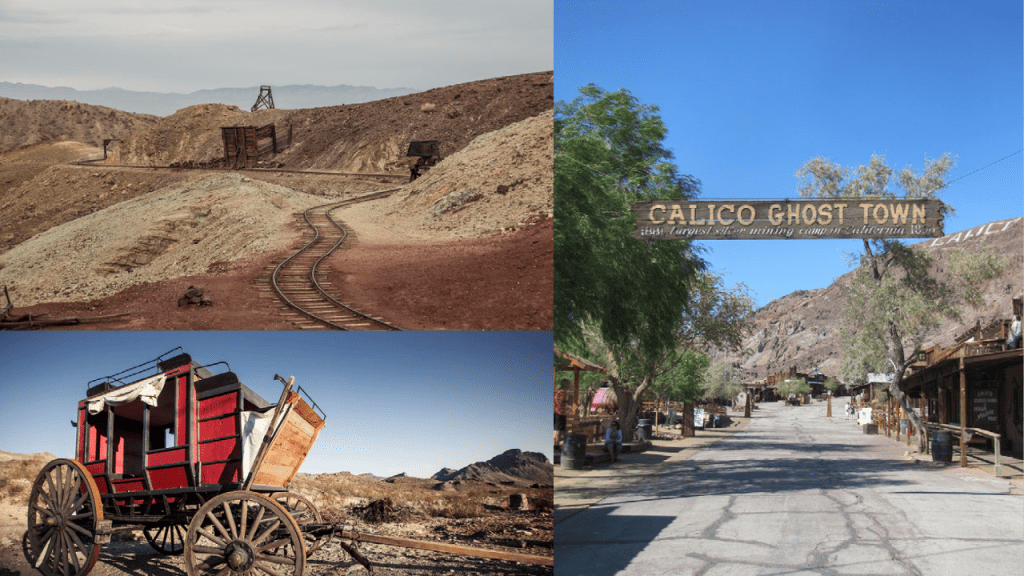
Presently, Calico is part of the San Bernardino County Regional Parks system, which is visited by people from across the country and from all over the world. Along with its history and attractions, Calico Ghost Town has shops, restaurants and offers camping, hiking and off-roading.
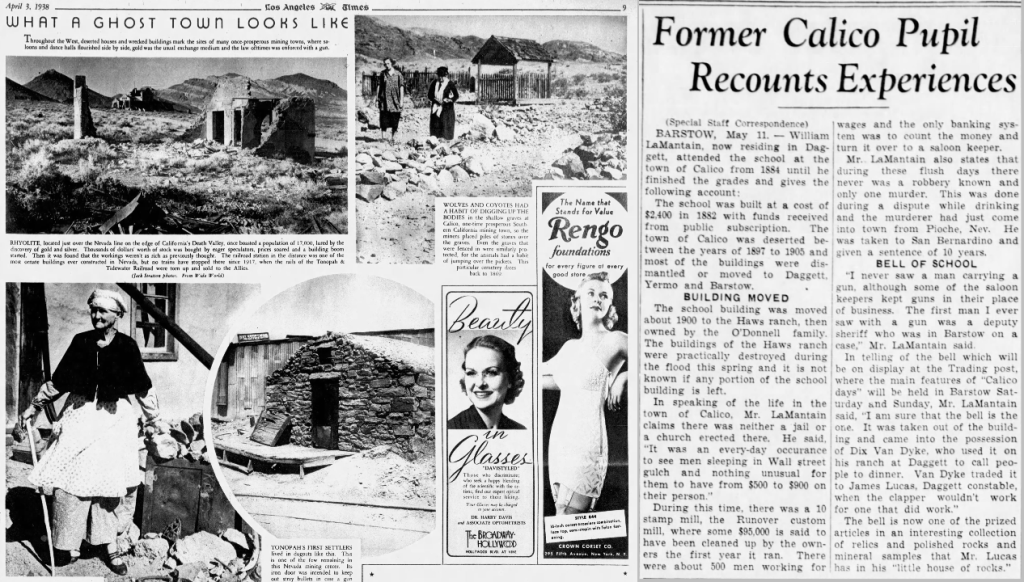
Clippings from the local newspapers from 1938 detail the charm and importance of this ghost town long before Walter Knott invested in the 1950’s. William S. LaMantain gives an account of growing up in Calico discussing the decline of the town and the spirit of the old west. The city of Barstow celebrated Calico Days with parades and wild west shows with many of the locals dressing up as prospectors.
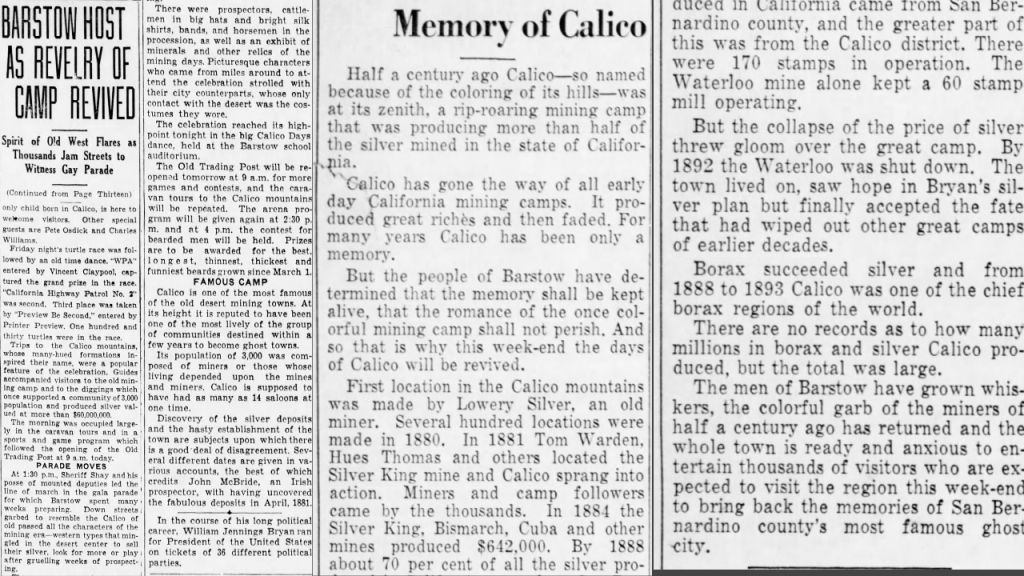
A Brief History
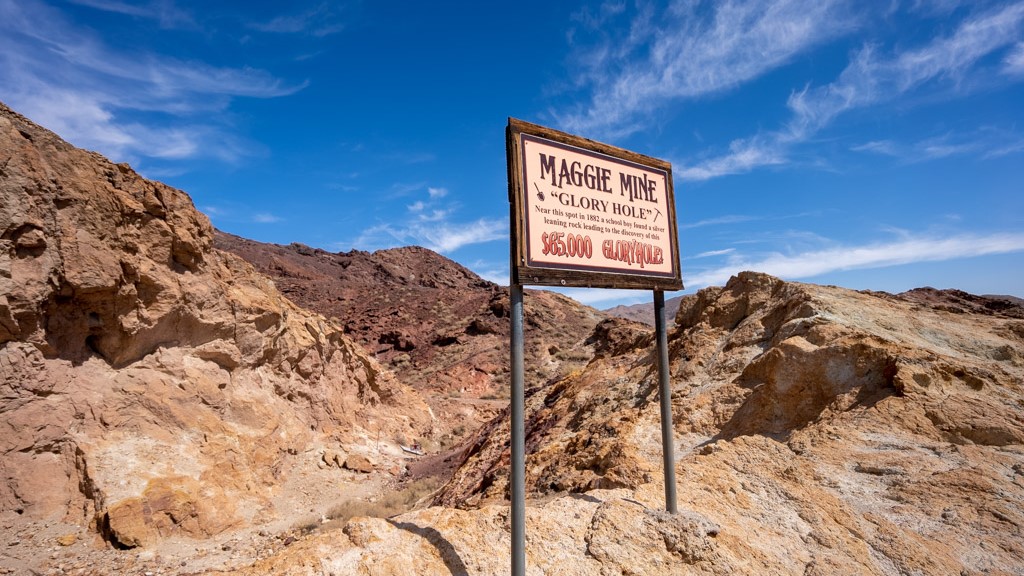
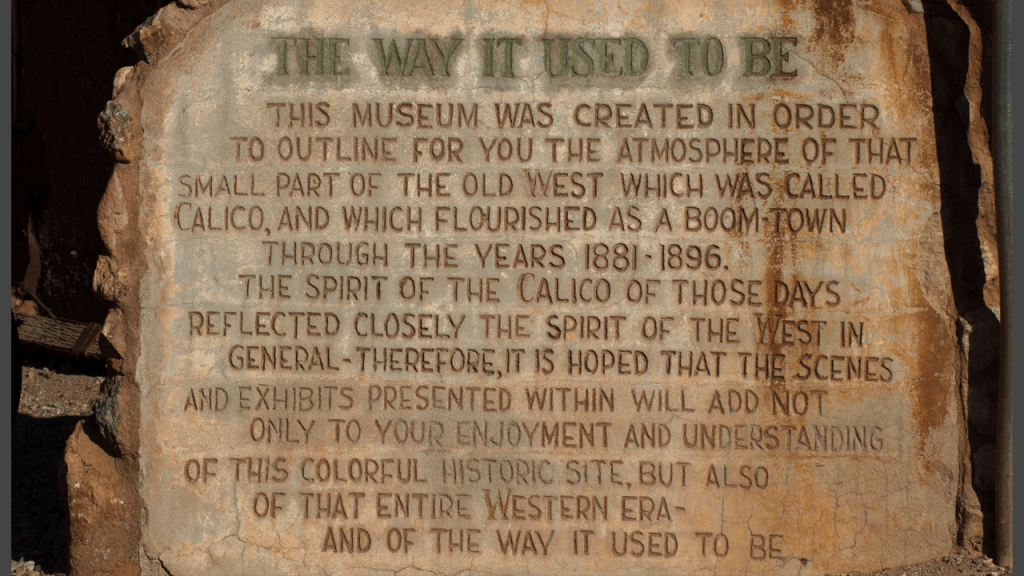
In 1881, one of the largest silver strikes in California was discovered in a desert area named Calico. The town grew as prospectors dug into the rainbow-colored mountains which inspired the name for the town and mined tons of the precious metal. Over 500 mines were recorded during Calico’s active time.
With hard work, the town grew to over 1,200 residents with three hotels, five general stores, a market, saloons, three restaurants, boarding houses and even brothels surfaced. Calico continued to prosper with the discovery of the borate mineral colemanite.
A major source of boron, colemanite was discovered in 1884 and named for the owner of the California mine where it was first found, William Tell Coleman. The color of this stone ranges from colorless to white to grey, sometimes yellowish. A mineral used for heat resistant glass and other things like cosmetics, medicines, and industrial usages. After that discovery, the population grew to over 3,000 in Calico.
That was a decent size town during the 1890s through the 1920s. Then, just like the silver, the colemanite dried up, and the town’s population was left to consume, deplete, and destroy elsewhere, leaving a charming historical landmark.
Ghosts have been reported in the nearby Boot Hill of Calico Cemetery. This is the section of town easily visited just southwest of the entrance, where locals and badmen were buried during Calico’s boomtown era.


 Favourite Haunts
Leave a comment