
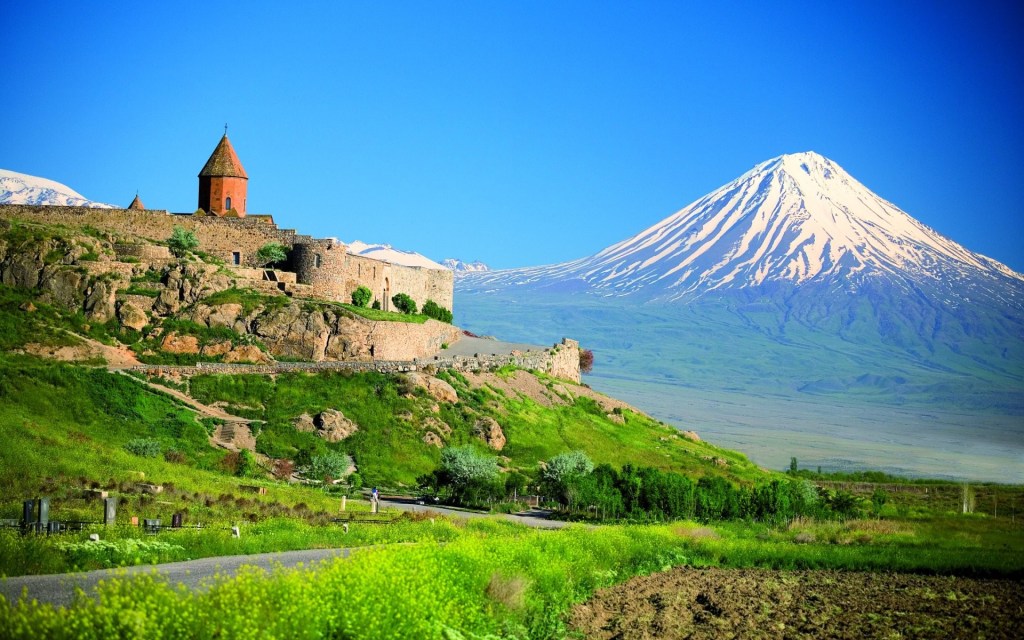
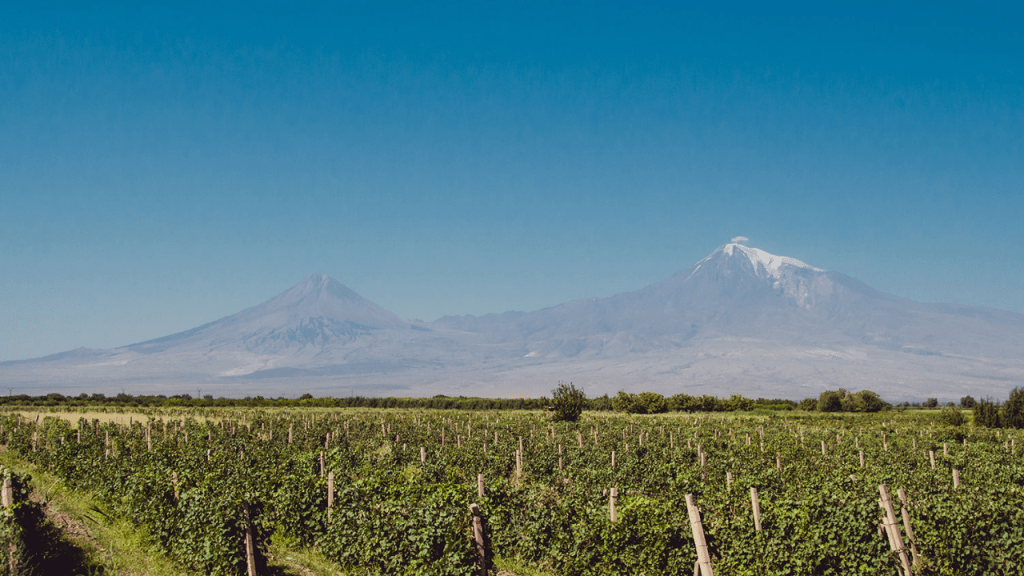
Ararat is dormant compound volcano on the Armenian plateau in the extreme east of Turkey. The mountain has been called by the name Ararat (in the West) since the Middle Ages, as it began to be identified with “mountains of Ararat” described in the Bible as the resting place of Noah’s Ark, despite contention that Genesis 8:4 does not refer specifically to a Mount Ararat. It is the principal national symbol of Armenia and has been considered a sacred mountain by Armenians. It is featured in Armenian literature and art and is an icon for Armenian irredentism. It is depicted on the coat of arms of Armenia along with Noah’s Ark. Ararat is sacred to the Armenians, who believe themselves to be the first race of humans to appear in the world after the flood.
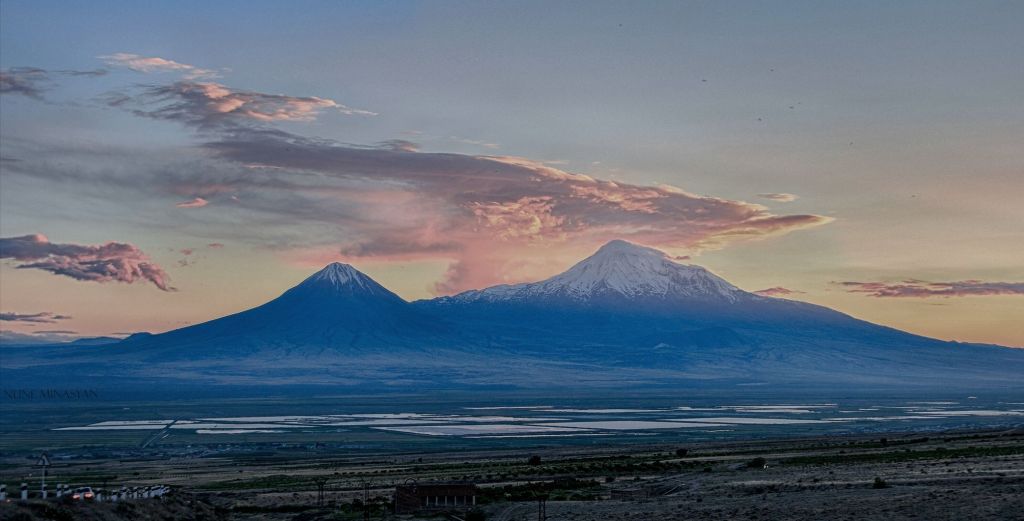
Ararat consists of two peaks, their summits about 7 miles (11 km) apart. Great Ararat, or Büyük Ağrı Dağı, which reaches an elevation of 16,945 feet (5,165 meters) above sea level, is the highest peak in Turkey. Little Ararat, or Küçük Ağrı Dağı, rises in a smooth, steep, nearly perfect cone to 12,782 feet (3,896 meters). Both Great and Little Ararat are the product of eruptive volcanic activity. Neither retains any evidence of a crater, but great cones and fissures on their edges.
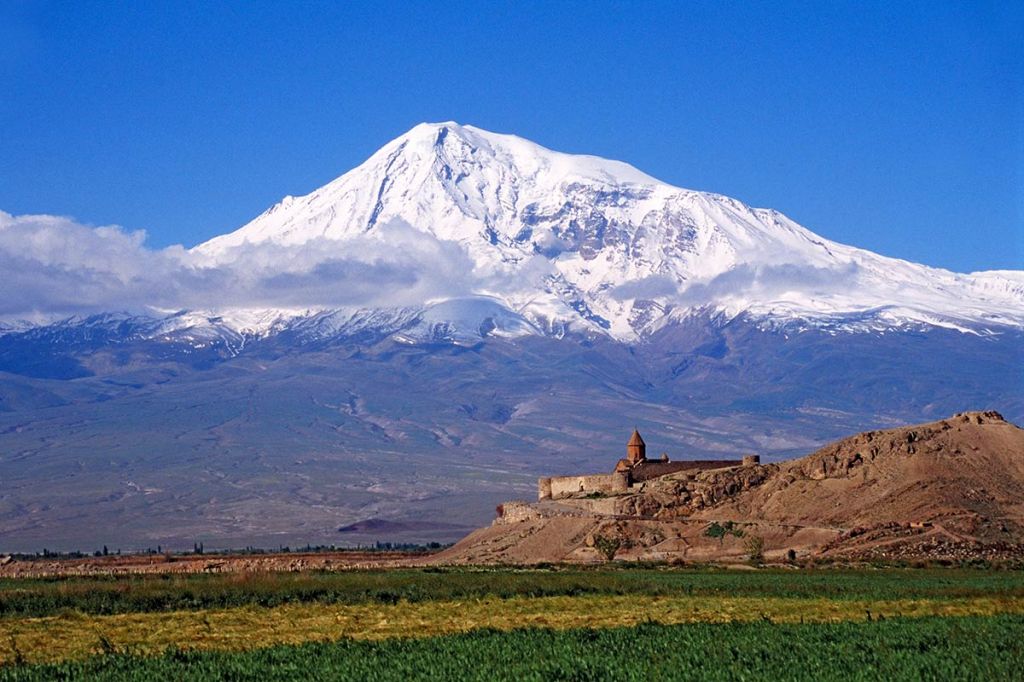
The only true glacier is found on the northern side of the Great Ararat, near its summit. The center zone of Ararat, measuring from 5,000 to 11,500 feet (1,500 to 3,500 meters), is covered with good pasture grass and some juniper; there the local Kurdish population graze their sheep. Most of the Great Ararat is treeless, but Little Ararat has scant birch groves. Despite the abundant snow, the Ararat area suffers from scarcity of water.
A Persian legend refers to the Ararat as the cradle of humanity. There was previously a village in the heights of the Ararat above the Aras plain, at the point where, according to local lore, Noah built an altar and planted the first vineyard. Above the village Armenians erected a monastery to commemorate St. Jacob, who is said to have tried repeatedly but was unsuccessful reaching the summit of Great Ararat in search of the Ark. In 1840 an eruption and landslide destroyed the village, the monastery of St. Jacob, and a nearby chapel of St. James, and it also killed hundreds of people.
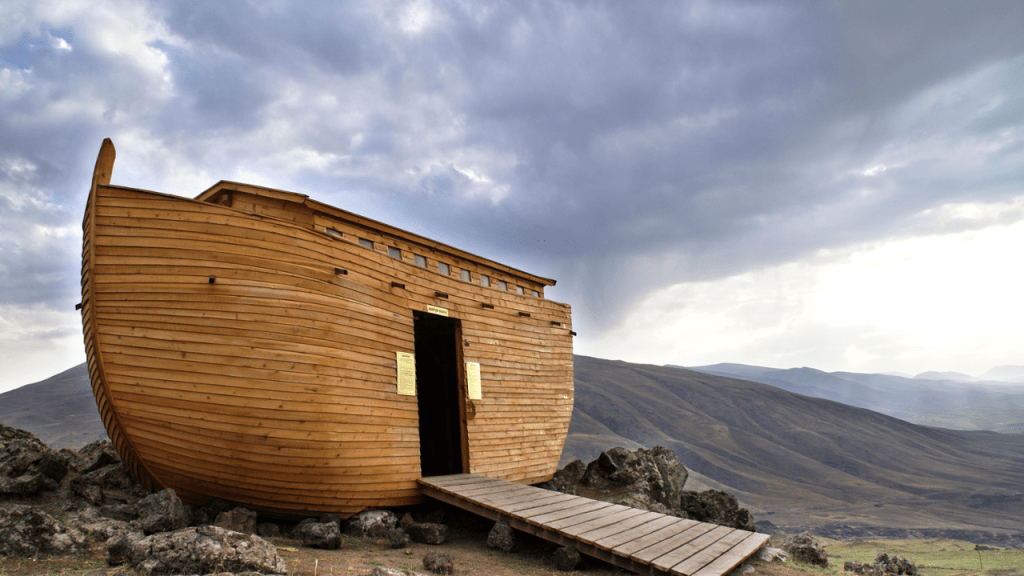
Local legend maintained that the Ark still lay on the summit, but that God had declared that no one should see it. In September 1829, Johann Jacob von Parrot, a German, made the first recorded successful ascent. Since then, Ararat has been ascended by several explorers, some of whom have claimed to have seen the Ark’s remains.
Climbing Mount Ararat
Mount Ararat Expedition has several climbing options with tours ranging in length. If one would like to climb it in a short period of time, then there is the “Climbing Mount Ararat Extreme” in only 4 days. Their climb standard is 9 days, while their longest “Climbing Mount Suphan, Mount Nemrut, and Mount Ararat Combined” is over 14 days. There are a few other tours in between.
Climbing Mount Ararat does not need advanced mountaineering experience, but one should be familiar with at least the basic use of crampons. It is a strenuous mountain and can be windy and cold. Anyone who is fit, prepared, and acclimatized has a good chance of being able to stand on the peak (see if one can snap a pic of Noah’s Ark on the way up).
Mount Ararat Expedition’s schedules are normally designed to have adequate time for acclimatization treks and to experience the villages, culture, and geography of the region. Schedules are planned so that there is time to wait for better conditions in case of adverse weather.
Climbing Expeditions and Tours
Gallery


 Favourite Haunts
Leave a comment