
GEOGLYPHS
A polylith is a megalithic structure such as a dolmen or stone circle made of several or many stones. These magnificent structures are man-made. The most famous examples are Stonehenge of Wiltshire England, and the heads of Easter Island. There are many thousands of stone megaliths discovered in almost every country in Europe, from Scotland to Italy. The most famous example of these stone constructions is Stonehenge in Wiltshire England. The reason that these structures are similar is a mystery. However, now experts believe they have discovered why almost identical megaliths are found all over Europe and how the practice originated and spread throughout the continent.
From Brittany, the construction of megaliths spread to the rest of France, Spain, and to the British Isles by stone-age sailors, according to the study. Based on the analysis, the first megaliths were typically found in a coastal region or on islands. They only emerged inland at a much later date, suggesting that the practice initially developed on coastal areas. This is strong evidence that the idea for these stone constructions were first spread by sea travel.
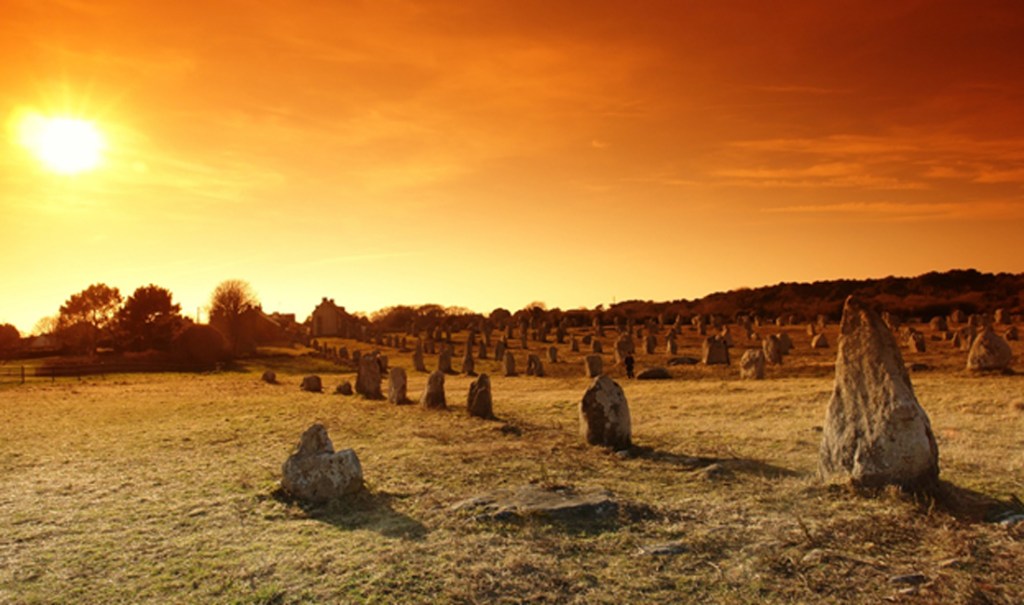
Scientists found that the earliest megaliths came from North-West France in the region of Brittany. They found that the first megaliths developed in this area on the Atlantic coast of France in about 4,700 BC. This was not a surprise finding as Brittany has a great many examples of megaliths such as dolmens and the famous Carnac Stones. Interestingly, the experts also found evidence that the practice of building monuments such as Stonehenge formed from the construction of elaborate tomb-complexes, which date from 5000 BC in the region.
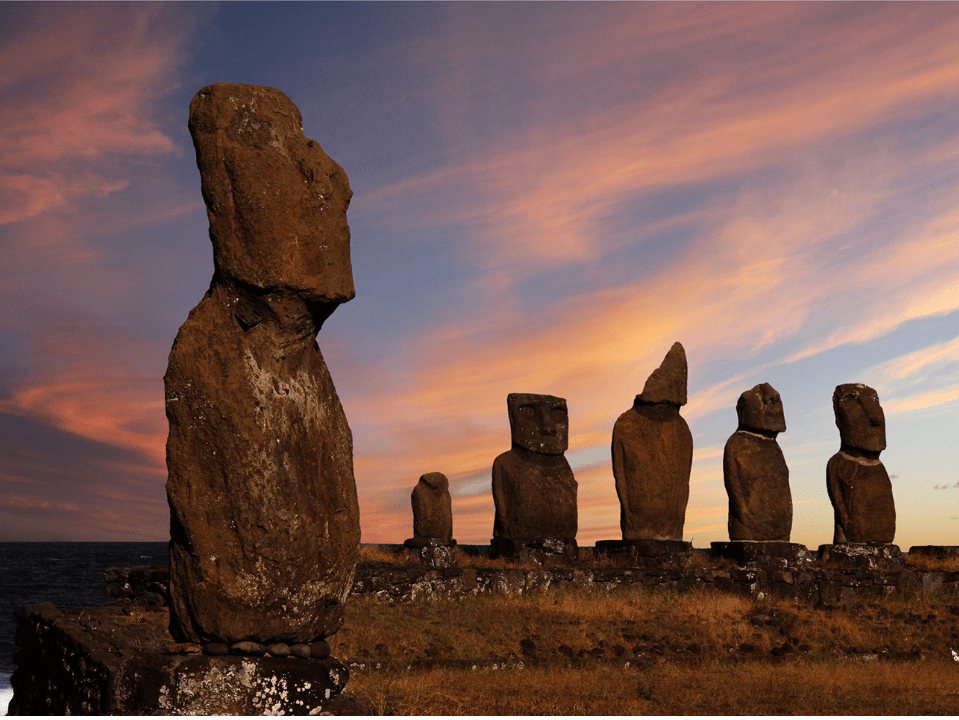
EASTER ISLAND HEADS – RAPA NUI – CHILE
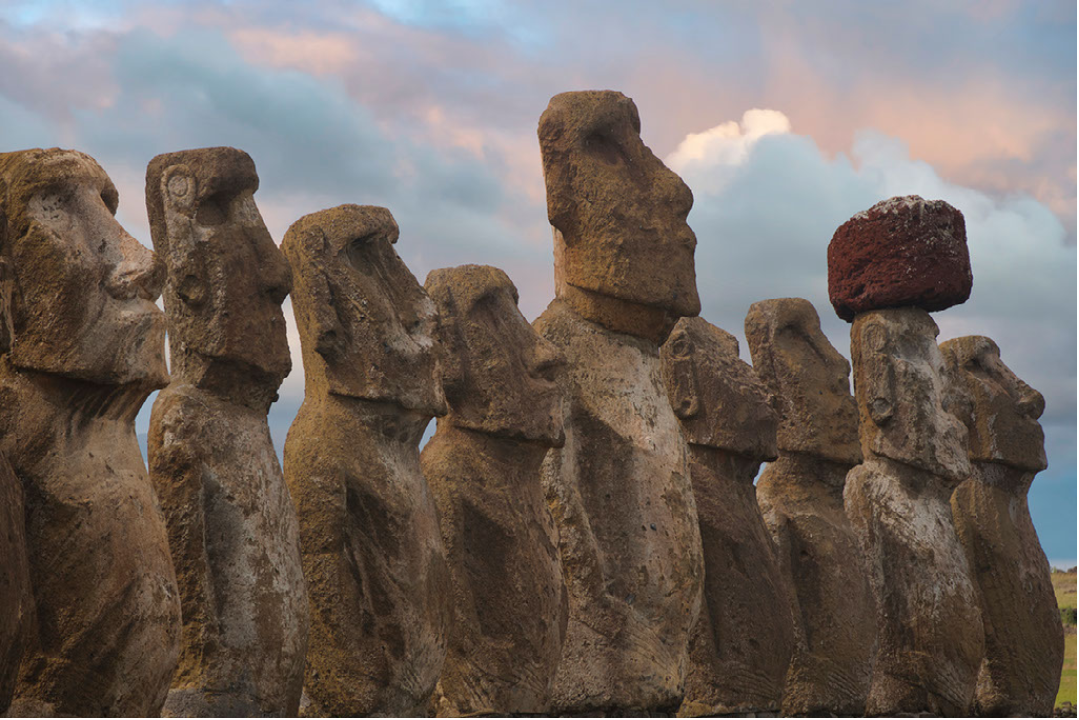
The monstrous eyeless statues of Easter Island have baffled scientists for centuries. More than 600 stone giants some weighing 70 short tons have been found on the barren island. The moai are made of basalt, the volcanic rock that makes up nearly 90% of the volcanic rock on the planet’s surface. They were carved from tools made of basalt. In 2010, the world was left speechless with what researchers from the Easter Island Statue Project (EISP) found underneath the giant moai – bodies.
Founded in 1982 by American archaeologist Jo Anne VanTilburg, EISP’s mission was to study the moai and nearly two decades later, in 2000, a comprehensive ongoing project was launched with the help of a Rapa Nui co-worker Cristián Arévalo Pakarati to uncover the island’s mysterious history. In 2010, while excavating two statues from the island they saw that beneath the giant heads were giant bodies. This meant that the moai sculptures stretched several feet underground.
Due to the eroding landscape, the torso and waist became buried while the head remained above the ground, creating the illusion that the moai were just giant heads. Researchers also discovered detailed carvings and ancient symbols that looked like half-moons on some statues. They hope that these symbols also knowns as petroglyphs, will help them uncover more secrets about the Rapa Nui. Since the moai are made from porous stone, they are vulnerable to erosion, and hence the EISP’s main objective is to restore and preserve them.
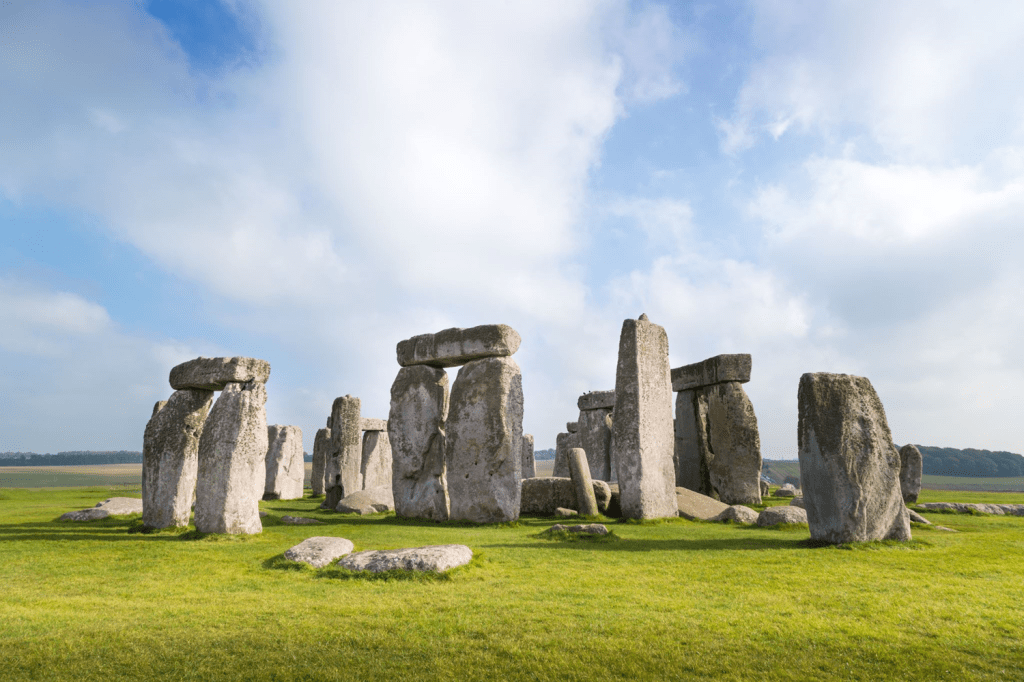
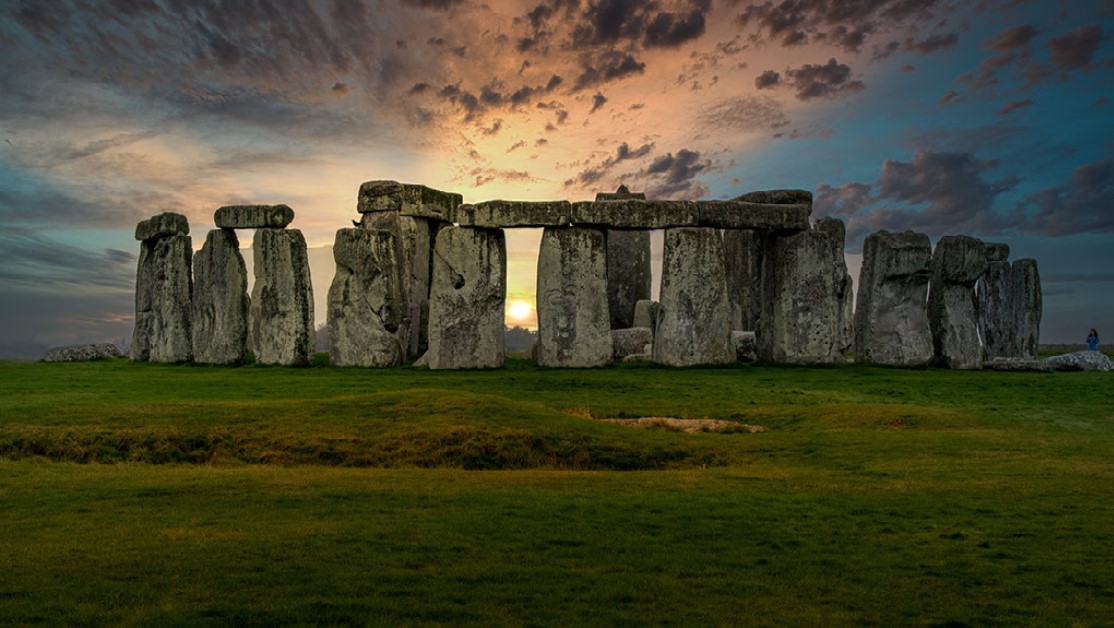
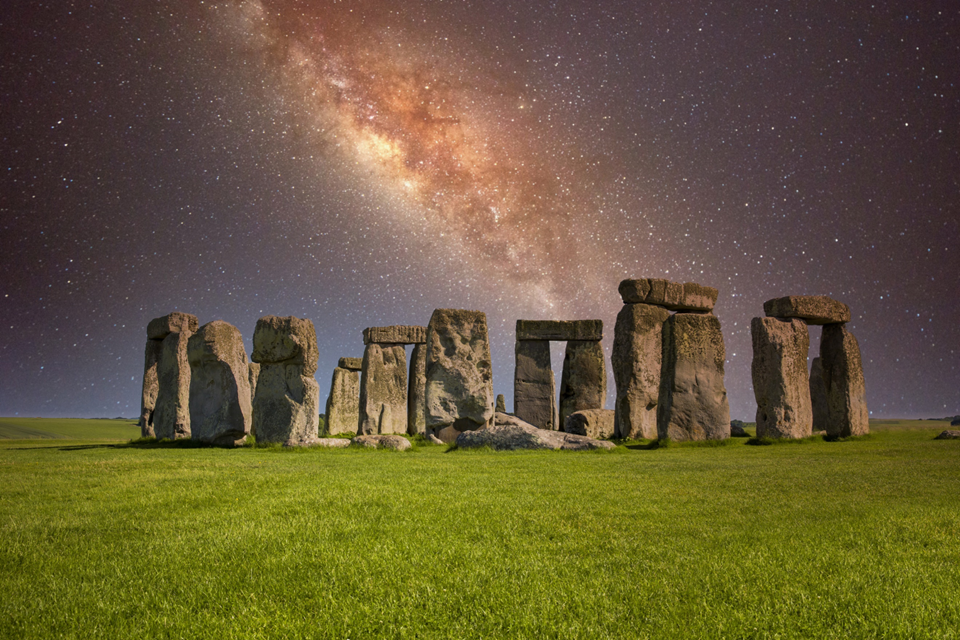
Stonehenge
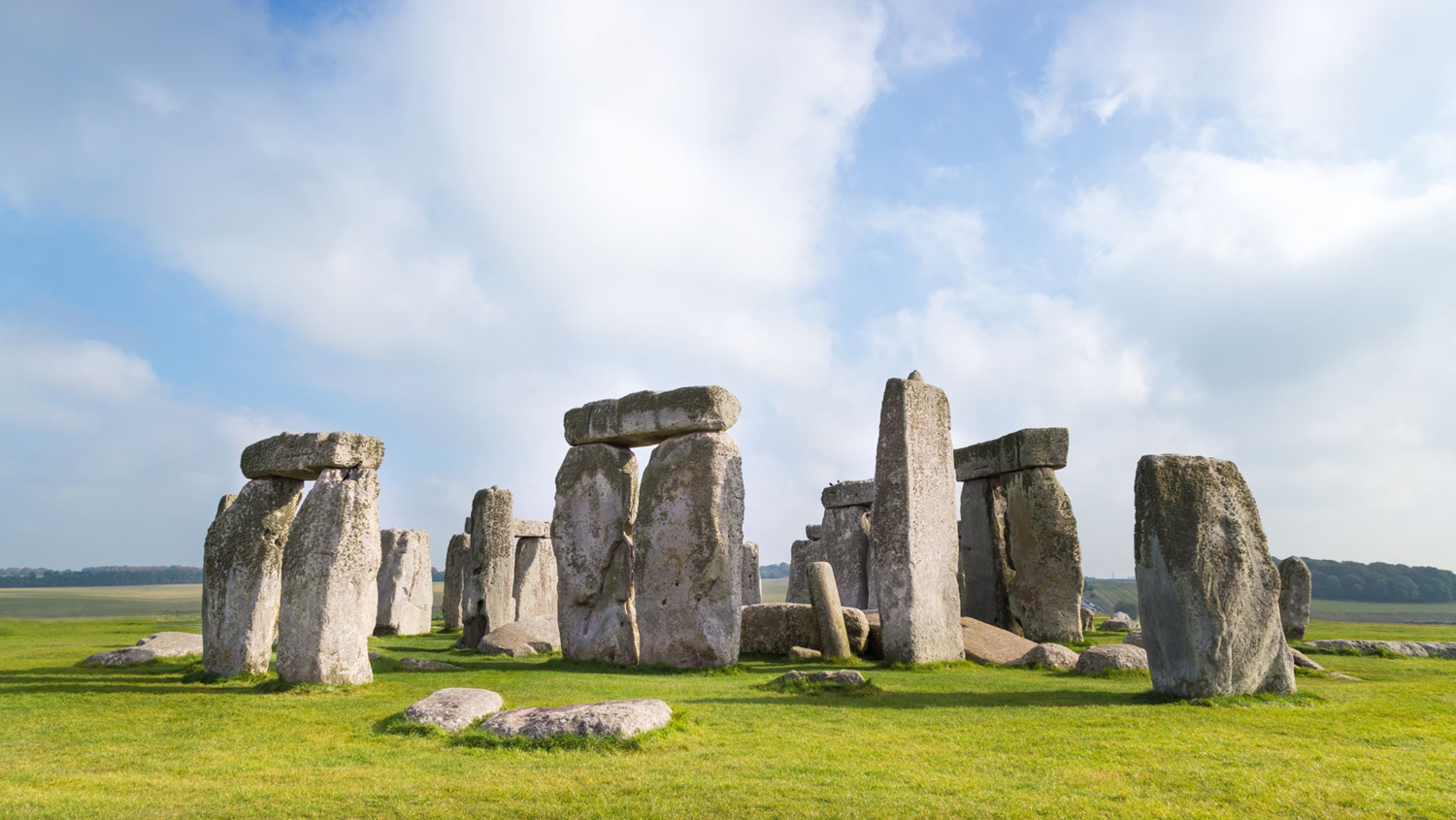
Stonehenge is believed to have been a burial ground from its inception. Human bone deposits date from 3000 BC, when the ditch and bank were first dug, and continued for at least another 500 years.
Archaeologists believe that Stonehenge was constructed from around 3000 BC to 2000 BC. The surrounding circular earth bank and ditch, which constitute the earliest phase of the monument, have been dated to about 3100 BC. Radiocarbon dating suggests that the first bluestones were raised between 2400 and 2200 BC.
The whole monument is aligned towards the sunrise on the summer solstice and sunset on the winter solstice. The stones are set within earthworks in the middle of the densest complex of Neolithic and Bronze Age monuments in England, including several hundred tumuli or burial mounds. The rocks of Stonehenge contain bluestones. The term “bluestone” in Britain is used loosely to describe all of the “foreign,” not intrinsic, stones and rock debris at Stonehenge.
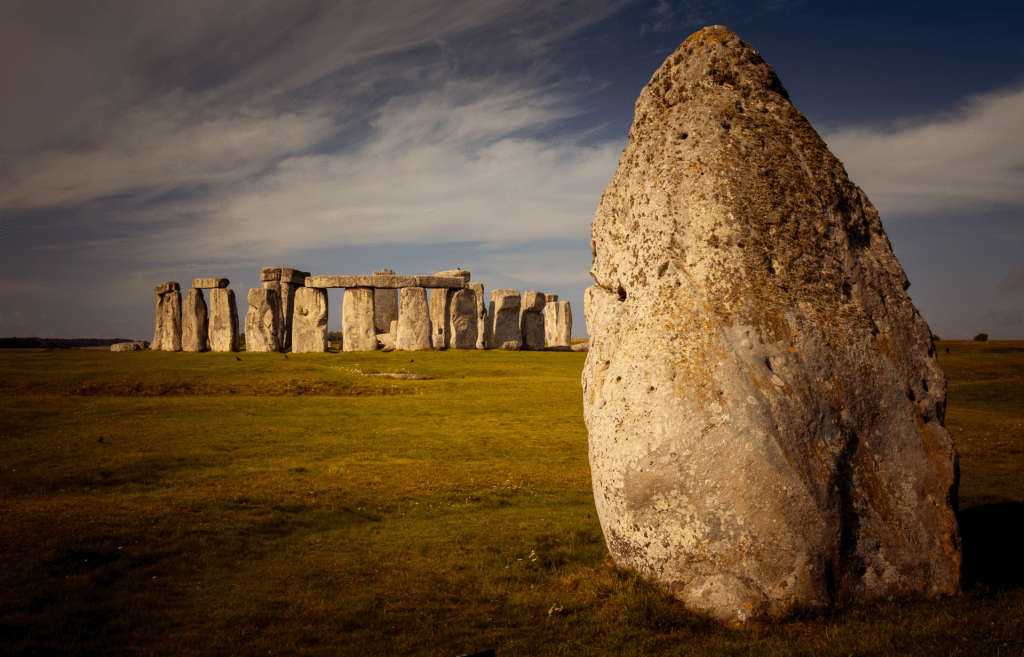
The Heel Stone
It has been known by many names in the past, including “Friar’s Heel” and “Sunstone”. At the Summer solstice an observer standing within the stone circle, looking northeast through the entrance, would see the sunrise in the approximate direction of the Heel Stone. And the sun has been consistently photographed over it ever since.
The Devil bought the stones from a woman in Ireland, wrapped them, and took them to Salisbury plain. One of the stones fell into the Avon, the rest were carried to the plain. The Devil then cried out, “No-one will ever find out how these stones came here!” A friar replied, “That’s what you think!”, whereupon the Devil threw one of the stones at him and struck him on the heel. The stone stuck in the ground and is still there.
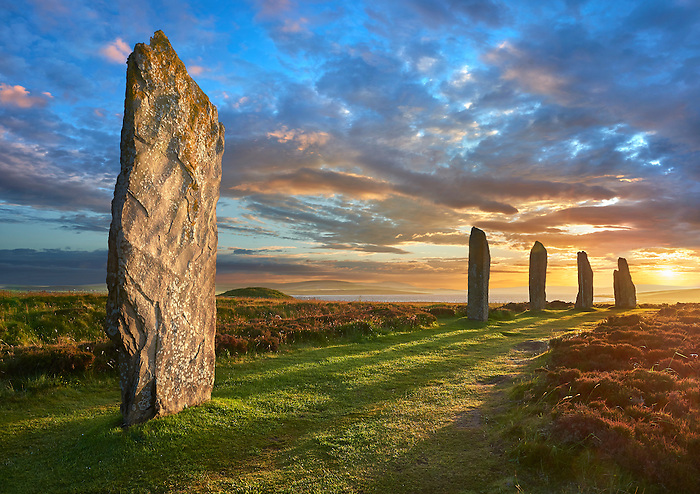
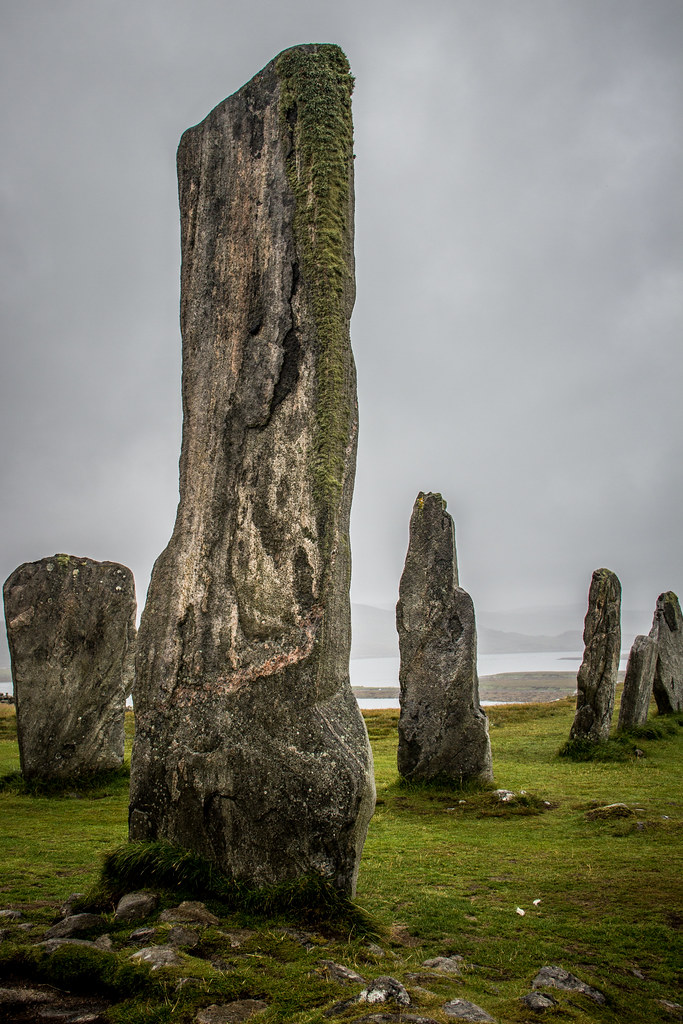
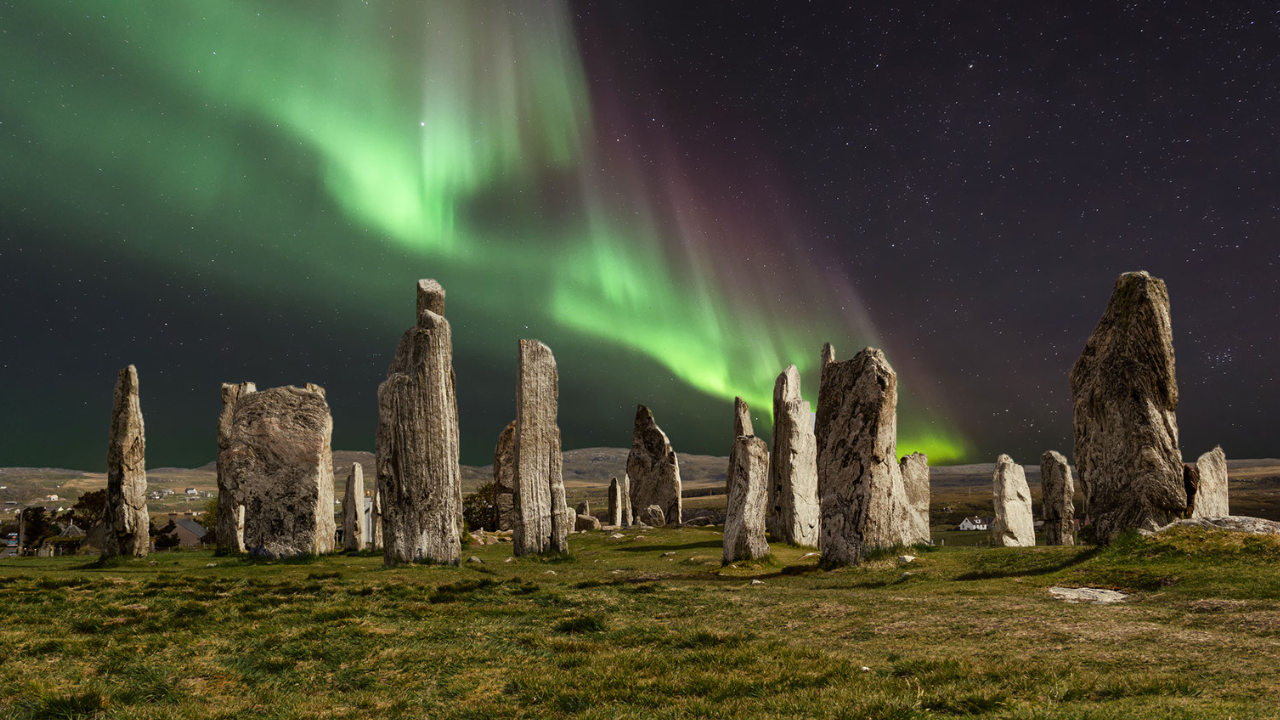
CALLANISH STANDING STONES, SCOTLAND
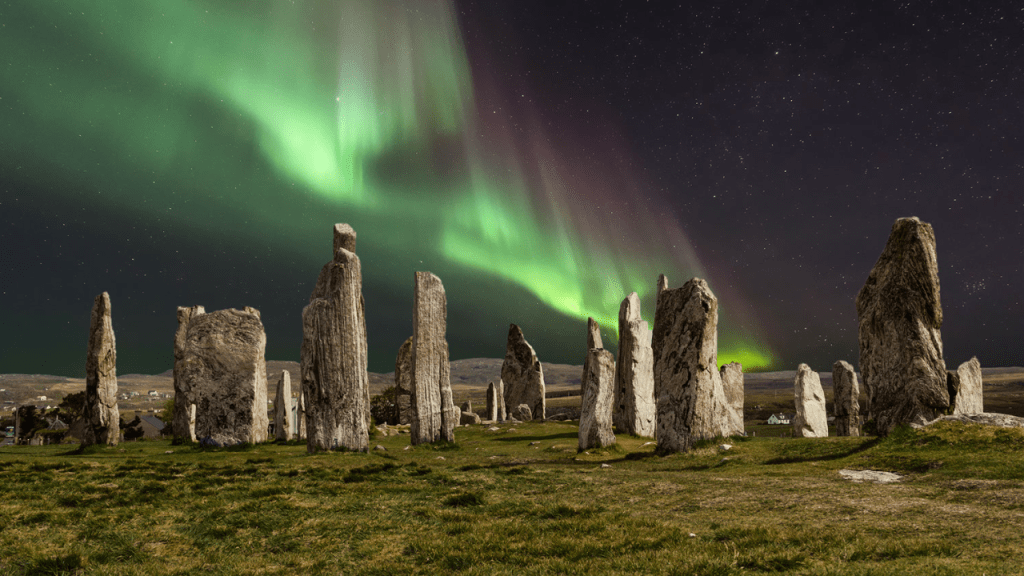
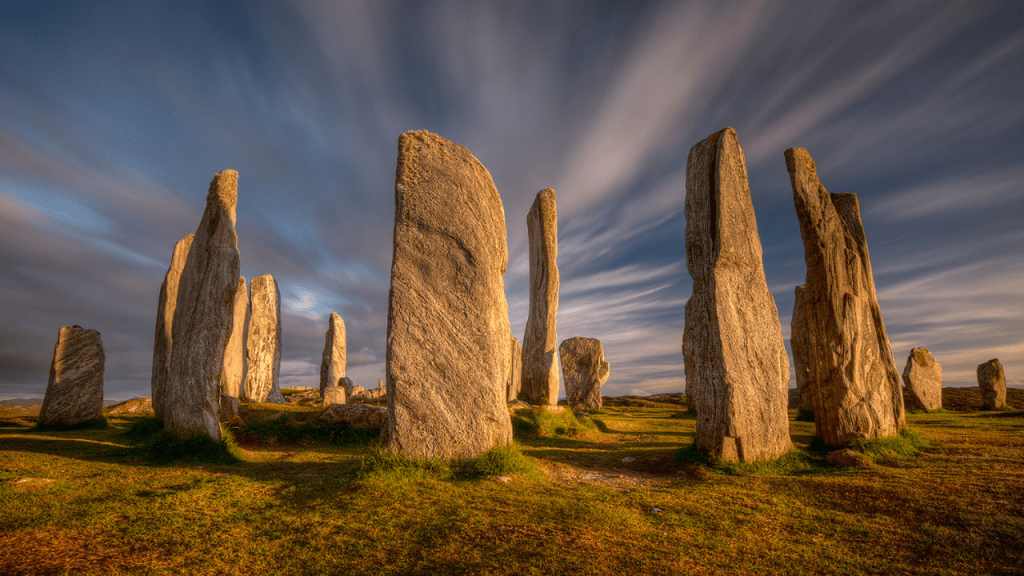
Callanish in Scottish Gaelic Calanais is a village on the west side of the Isle of Lewis, in the Outer Hebrides or Western Isles of Scotland. Callanish is within the parish of Uig. A linear settlement with a jetty, it is on a headland jutting into Loch Roag, a sea loch 13 miles (21 km) west of Stornoway with the hills of Great Bernera as a beautiful supporting landscape.
The Callanish Stones “Callanish I”, a cross-shaped setting of standing stones erected around 3000 BC, are one of the most spectacular polylith monuments in Scotland. Callanish was a very sacred place to prehistoric people living there and it remained an active focus for prehistoric religious activity.
Callanish II and Callanish III – lie just over a kilometer southeast of the main Callanish Stones, and originally consisted of circles of stones at least eight in number. The existence of other monuments in the area implies that Callanish was an active focus for prehistoric religious activity for at least 1500 years. Historic Environment Scotland states that the stones were erected roughly 5,000 years ago, pre-dating Stonehenge.
Carnac Stones
The Carnac stones consists of stone alignments (rows), dolmens (stone tombs), tumuli (burial mounds) and single menhirs (standing stones). More than 3,000 prehistoric standing stones have been hewn from local granite and erected by the pre-Celtic people of Brittany and form the largest such collection in the world. Most of the stones are within the Breton municipality of Carnac, but some to the east are within neighboring La Trinité-sur-Mer. The stones were installed at some stage during the Neolithic period, probably around 3300 BC, but some may date to as early as 4500 BC.
Though the stones date from 4500–3300 BC, myths associate them with 1st century AD Roman and later Christian occupations. A Christian story associated with the stones held that they were pagan soldiers in pursuit of Pope Cornelius when he turned them to stone. Brittany has its own local versions based on the Arthurian legends. Local tradition claims that the reason they stand in such perfectly straight lines is that they are a Roman legion turned to stone by Merlin in defense of Camelot.
Ménec Alignments
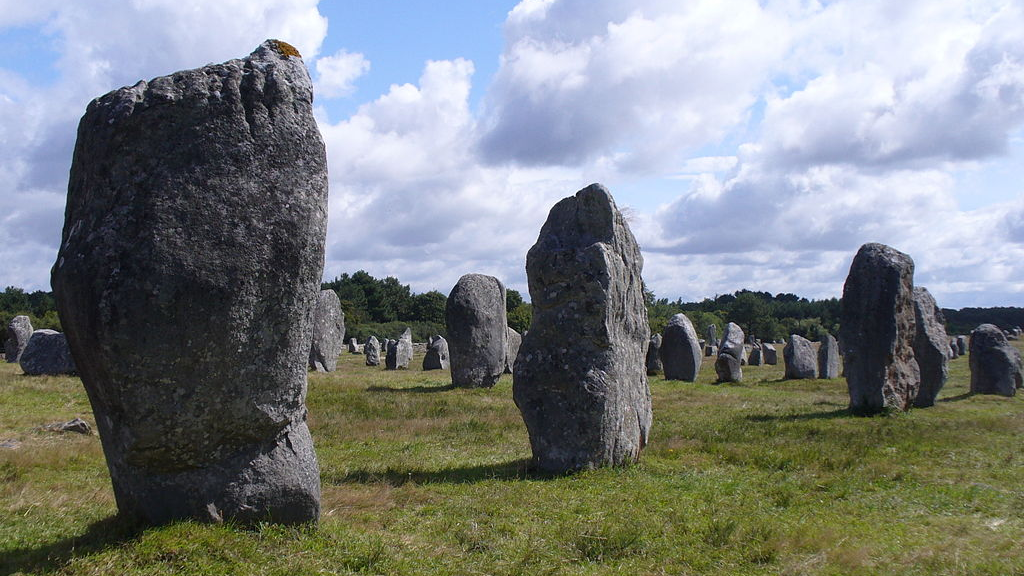
Eleven converging rows of menhirs stretching for 1,165 by 100 meters (3,822 by 328 feet) are what Alexander Thom considered to be the remains of cromlechs or stone circles. There is a cromlech containing 71 stone blocks at the western end and a very ruined cromlech at the eastern end. The largest stones, around 4 meters (13 feet) high, are at the wider, western end; the stones then become as small as 0.6 meters (2 feet 0 inches) high along the length of the alignment before growing in height again toward the extreme eastern end.
Tumuli
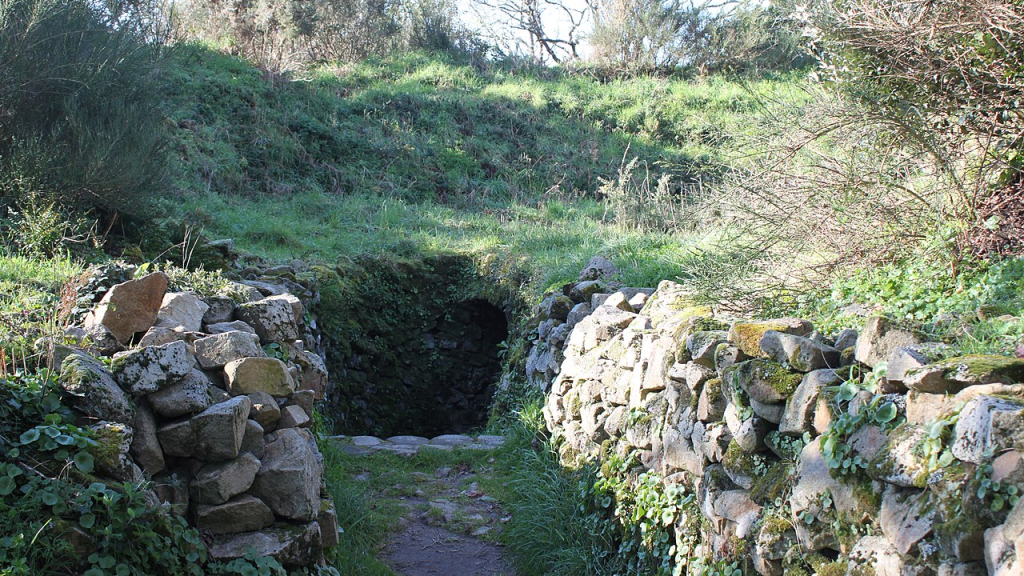
Known collectively as ‘Carnacéen tumuli’ Saint-Michel, Tumiac and Mané-er-Hroëk are three exceptionally large burial mounds that are distinguished in the Carnac and Morbihan area. Dating from the mid-5th millennium BC, each of these tumuli contained a megalithic burial chamber, containing the burial of only one individual, along with numerous large, polished stone axe heads, stone arm-rings, and jewelry made from Callais or variscite and turquoise.
Ring of Brodgar
Ranking with Avebury and Stonehenge the Ring of Brodgar of Mainland Orkney, Scotland is among the greatest of henge sites. The Ring of Brodgar is the only major henge and stone circle in Britain which is a perfect circle. The ring of stones stands on a small isthmus between the Lochs (lakes) of Stenness and Harray. The site is a scheduled monument and has been recognized as part of the “Heart of Neolithic Orkney” World Heritage Site in 1999.
The stone circle is 104 meters (341 ft) in diameter, and the third largest in the British Isles. The ring originally comprised up to 60 stones, of which only 27 remained standing at the end of the 20th century. The tallest stones stand at the south and west of the ring, including the “Comet Stone” to the south-east. The stones are set within a circular trench up to 3 meters (9.8 ft) deep, 9 meters (30 ft) wide and 380 meters (1,250 ft) in circumference. They were carved out of the solid sandstone bedrock by the ancient inhabitants.
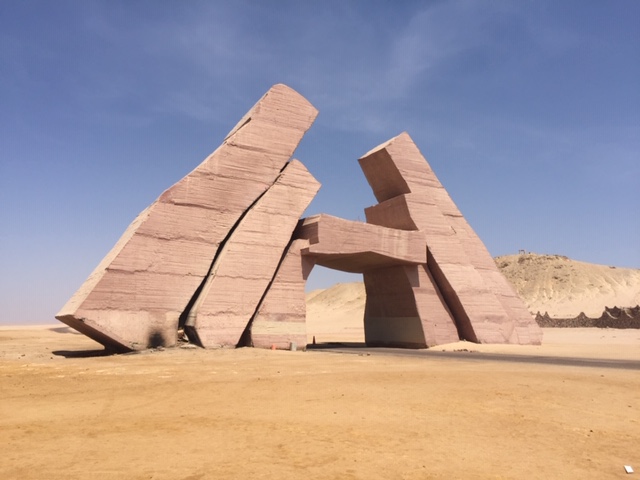
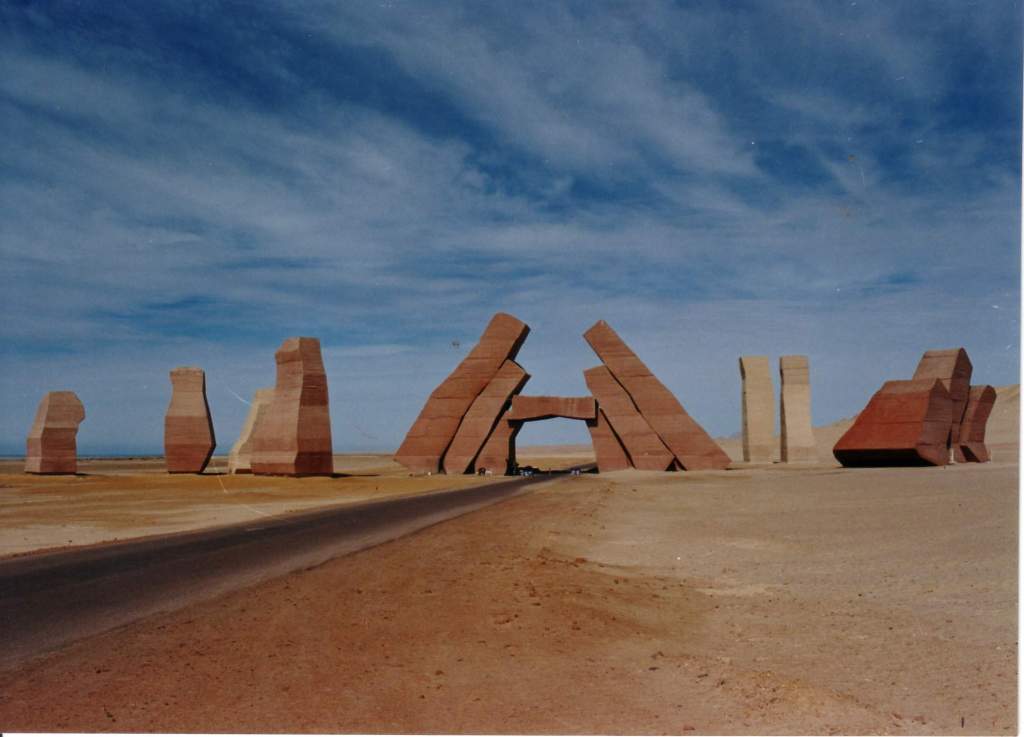
THE GATE OF ALLAH – RAS MOHAMMED NATIONAL PARK – EGYPT
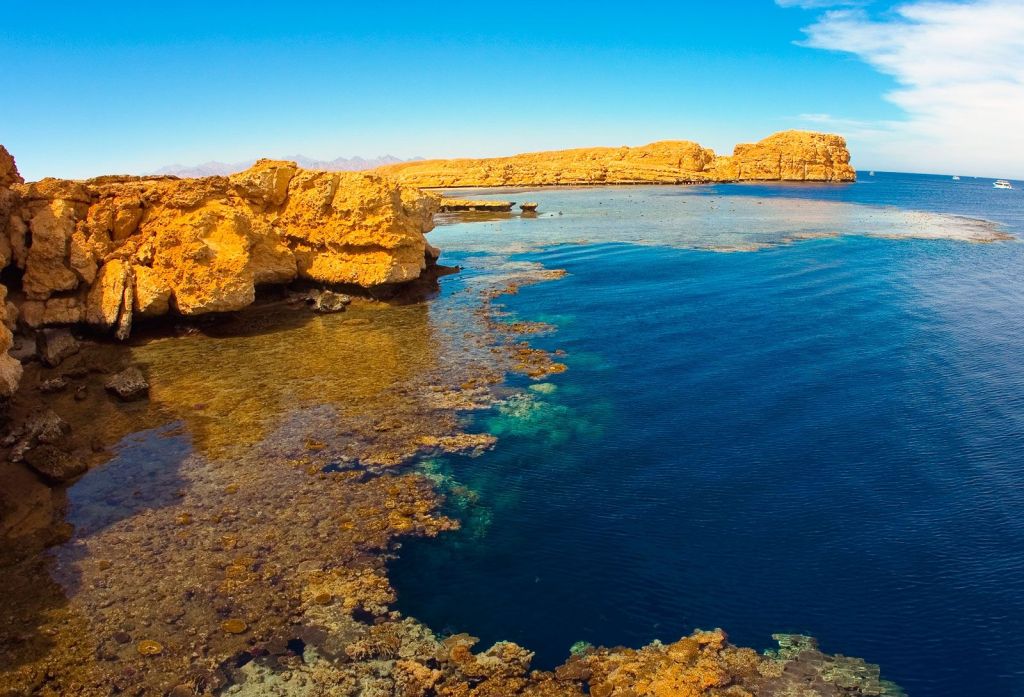
Ras Muhammad National Park is located in Egypt on the Sinai Peninsula. It is found at the most southern tip of the peninsula. The national park encompasses an area of 185 square miles or 480 sq kilometers. This was the first national park for Egypt. The name literally means “Mohammad’s Head”, where “head” in this instance means “headland”. It is said in the area that the name arose because inside view the contour of the cliff looks like the profile of a bearded man’s face, with horizontal hard strata providing the nose and bearded chin. The gate of Allah was designed and installed by engineers in 1983.
Ras-Mohammad is located at approx. 30 km south of the Gulf of Suez to the west and the Gulf of Aqaba to the east. It is home to the extraordinarily beautiful coral reefs and is one of the best diving sites in the world, where you can enjoy snorkeling, and discover the colorful marine life or simply relax on the sandy beach.
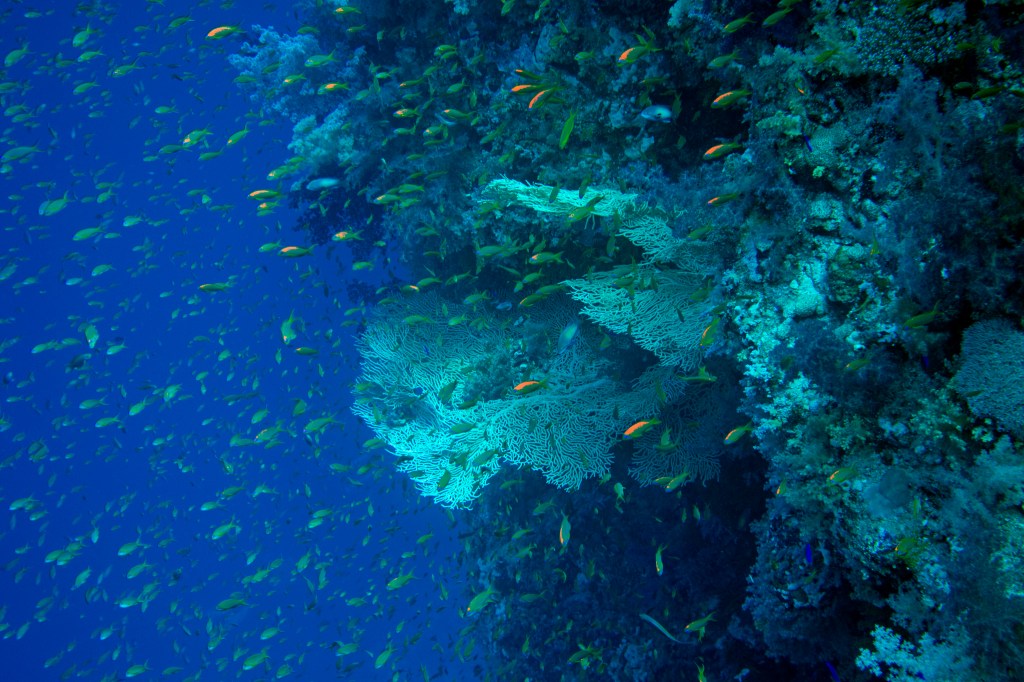
Ras Muhammad National Park was declared for protection from intrusive fishing methods such as using dynamite and knives that might impact the coral reef and the fish populations. In 1983, the Egyptian Environmental Affairs Agency (EEAA) established the area as a marine reserve for the protection of marine and terrestrial wildlife.
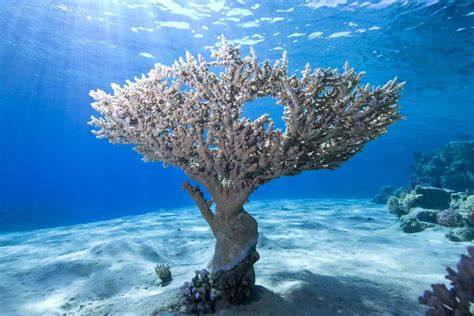
The park is not known for trails. It is mainly known for the coastal landscapes, crystal clear blue water, and exploring the underwater world of the Red Sea Reef and some of the neighboring reefs along the peninsula. Snorkelers and scuba divers will find Ras Muhammad National Park an underwater wonderland, with species of life that are only found in the Red Sea Reef area such as clownfish, the colorful parrotfish, and red sea turtles. The Egyptian Maldives or the White Island is a treat for undersea aficionados.
Sharm El Sheikh – White Island Tour
Ras Mohamed National Park Half Day by Bus – Sharm El Sheikh
Top Dive Spots in the Red Sea Tour


MORE PHOTOS OF FANTASTIC ROCKS

 Favourite Haunts
Leave a comment